Decoration Technique
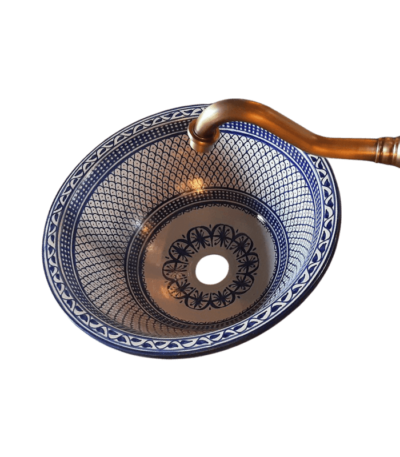
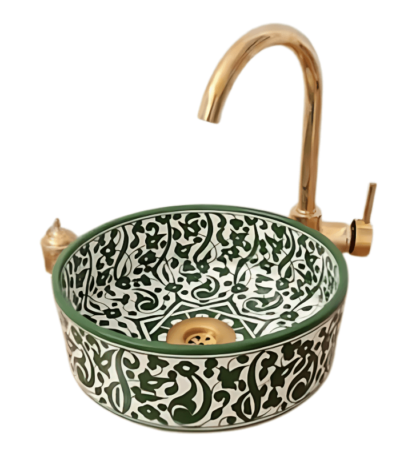
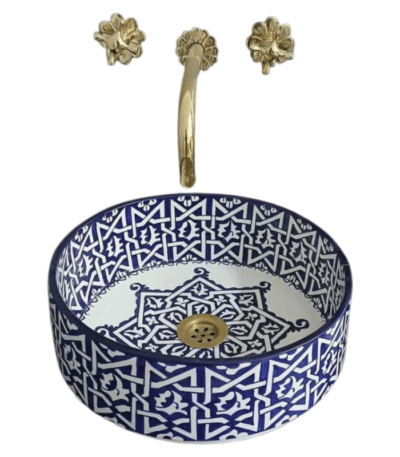
The washbasin often features hand-painted geometric patterns, floral motifs, and Arabic calligraphy, reflecting the timeless beauty of Moroccan art. Skilled artisans apply these intricate designs using traditional glazing techniques and natural dyes to create rich, vibrant color palettes. Some washbasins incorporate zellige tile mosaics, where individual ceramic tiles are hand-cut and arranged to form complex patterns, making each basin a one-of-a-kind creation. These designs are deeply rooted in Moroccan and Islamic artistic traditions, characterized by symmetry and the use of vibrant, earthy tones like cobalt blue, deep red, emerald green, and warm oranges.
Cultural Significance
The washbacine has a deep cultural and historical significance in Moroccan traditions. It is not just a utilitarian object but an embodiment of the country’s rich artisanal heritage. In Moroccan culture, washbasins are often associated with hospitality and cleanliness, essential elements in Moroccan homes and public spaces. The decorative and functional aspects of the washbasin also reflect the Moroccan philosophy of integrating beauty and function in everyday life. The designs on the washbasin often mirror the geometrical and floral motifs found in Moroccan architecture, such as those in the famous palaces, mosques, and riads.
Historically, washbasins have been used in Moroccan households as part of the ritual of ablution, or wudu, before prayer, symbolizing purity and spiritual preparation. In Moroccan homes, these washbasins are often found in the hammam (traditional bathhouse), where they are used for cleansing and rejuvenation.
Conclusion
The Handmade Moroccan Washbasin is more than just a functional piece—it’s an artistic expression of Morocco’s deep cultural traditions and craftsmanship. Whether used for its intended practical purposes or displayed as a decorative centerpiece, it serves as a beautiful reminder of Morocco’s centuries-old artisan traditions. Owning a washbasin like this allows you to bring a touch of Moroccan elegance, history, and craftsmanship into your home, while also celebrating the timeless beauty of traditional design.

 Canada
 USA
 Japan